
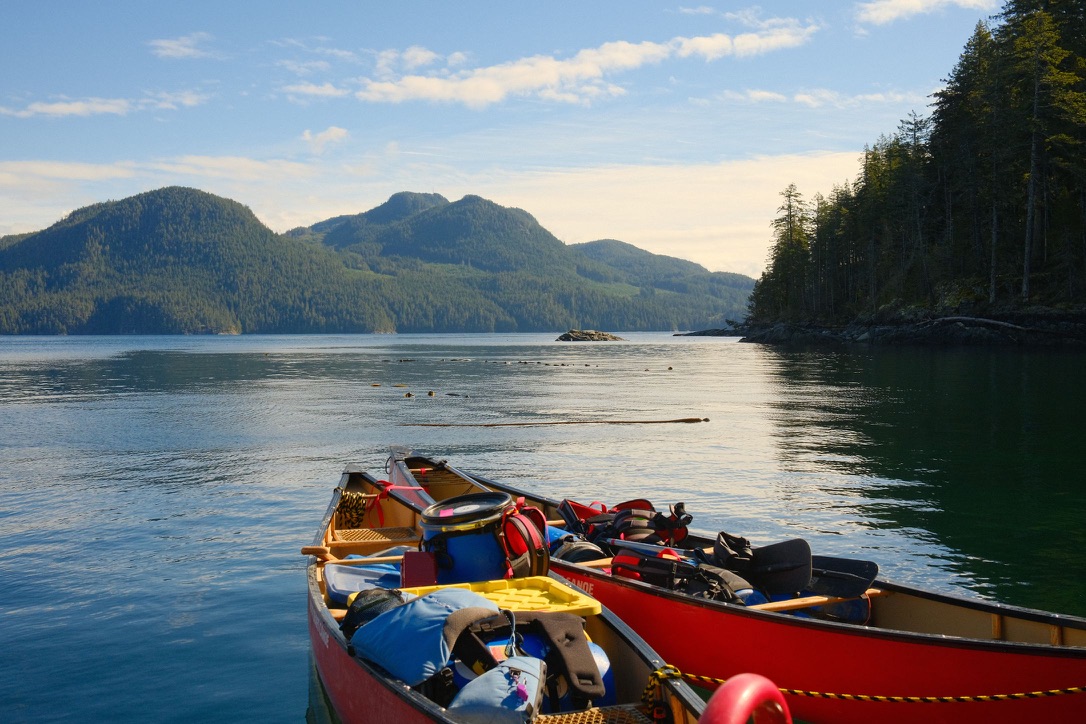
Through Currents and Crossings: Coastal Canoeing Lessons on the Salish Sea
Earlier this spring, I spent about a week honing my coastal canoe skills with Paddle Canada on Canada’s West Coast in the unceded, ancestral and traditional territories of many Coast Salish peoples. Over the course of six days, our small group paddled along the shores of Mayne Island, learning both technical skills like navigation, rescues, and manoeuvres in moving water, as well as how to adapt to the rhythms of the tide, weather, and the sea itself. These daily journal entries trace the week spent first in sheltered bays and later, in navigating currents and crossings in exposed coastal waterways.
March 1, 2026
I am seated on the passenger deck of the Salish Raven, the ferry that is whisking me home from my home on Vancouver Island to Mayne Island to spend the week completing my intro tandem canoe lake instructor and advanced coastal tandem canoe skills certifications through Paddle Canada. Mayne Island, along with Pender, Galiano, Salt Spring, and Saturna, comprise the main residential hubs of the Southern Gulf Islands. An archipelago at the southern end of the Strait of Georgia, the Southern Gulf Islands are sandwiched between British Columbia’s mainland and Vancouver Island. About 20,000 human residents, along with a diversity of terrestrial and marine wildlife, including orcas, sea lions, porpoises, snakes, bats, and a long list of shorebirds, call this region home. On a good day, you might catch a glimpse of a dorsal fin or hear the mesmerizing exhale of a surfacing whale, reminders that these waters are shared. The protected waterways that weave through the archipelago make the area a popular paddling destination. But with its tidal currents and busy ferry and shipping lanes, proper planning and preparation are a must. The sun is warm and inviting as the ferry pulls into Village Bay on Mayne Island.
The ramp is lowered with a mechanical groan, and my morning of quiet introspection on the upper deck gives way to the loud hum of vehicle engines starting again. Nervously, I drive towards Miner’s Bay to meet up with the other participants. After a quick round of introductions, we zip up our PFDs(personal floatation devices), grab a bailer, throw bag, and paddles, and bring the canoes down to the water. The afternoon is spent reviewing basic canoe strokes in preparation for spending the next few days that will be spend teaching them to one another. My knees and ankles are sore, easily fatigued and not used to kneeling so extensively after taking most of the winter off from paddling. Each movement feels deliberate, heavy and awkward with the lack of practice, my body slowly working to remember what felt automatic months ago. We practice docking maneuvers and carving turns in the sheltered bay, making adjustments throughout the afternoon as the tides change. The water transforms subtly beneath us, coercing constant awareness. By the time we are pulling the canoes back onto shore, my brain and body are both beginning to feel like mush, and I’m appreciative that we have a warm, cozy cabin to stay in this week. We clatter our gear back up the beach and then towards our vehicles, the scent of sea salt clinging to everything we bring back with us. Sleep will come easily tonight.
 March 2, 2026
Today is another beautiful, bluebird day. The sky stretches endlessly overhead, clear and uninterrupted blue, mirrored almost perfectly by the sea, distinct only because of the light ripples that shift through the water. The morning is spent back in Miner’s Bay, running through instructions for basic paddling strokes — forward, reverse, draw, pry, J stroke — using the IDEAS method. First, an
introduction, a couple of brief sentences that summarize the stroke. Next, a demonstration showing how to perform the stroke in the water with proper technique. Then, providing a more in-depth explanation about the stroke, noting how to execute the stroke and how it will maneuver the boat. Follow with an activity, getting everyone into the boats to try the stroke, watching technique and providing individualized feedback, and ensuring that everyone tries the stroke on both sides of the boat and from both the bow and stern positions. Lastly, summarize the key points and common errors. Each of us takes turns going through this process, leading a stroke lesson and then receiving feedback from our peers to refine our lessons.
We go through a few rounds of this before splitting up as a group, half of us taking off for lunch and the other half staying to work on some solo paddling techniques. Though the courses this week focus on tandem paddling, sometimes, as instructors, we may have an even number of participants in our courses, requiring us to teach while paddling a tandem boat solo. Usually, I find a way to rope a friend into joining me on my canoe outings or opt to kayak instead if I’m alone, so I have spent very little time paddling a canoe solo. I sit awkwardly, stomach grumbling, in the middle of a 16-foot prospector-style canoe, trying to keep it tracking in a straight line as I fumble through the motions of a C-stroke, feeling exposed and vulnerable. Every small mistake seems amplified without a partner to offset my actions and I force myself to slow down and feel each individual movement.
After we check off our solo skills, we spend the afternoon in the sunshine reviewing intermediate coastal canoeing skills, making sure we all feel prepared to spend the rest of the week in more open waters as we move on from the lakewater course to the coastal canoe course. Soon, the protected calm of the bay will give way to the anticipation of currents, wind, and exposure. The rest of the afternoon is spent back at the cabin, teaching theory lessons, wrapping up most of our instructor course materials, and preparing our immersion gear for doing rescues tomorrow. In the evening, wetsuits, drysuits, extra layers, and gear are laid out in small piles, a quiet acknowledgment of the cold water and long day that awaits us.
March 3, 2026
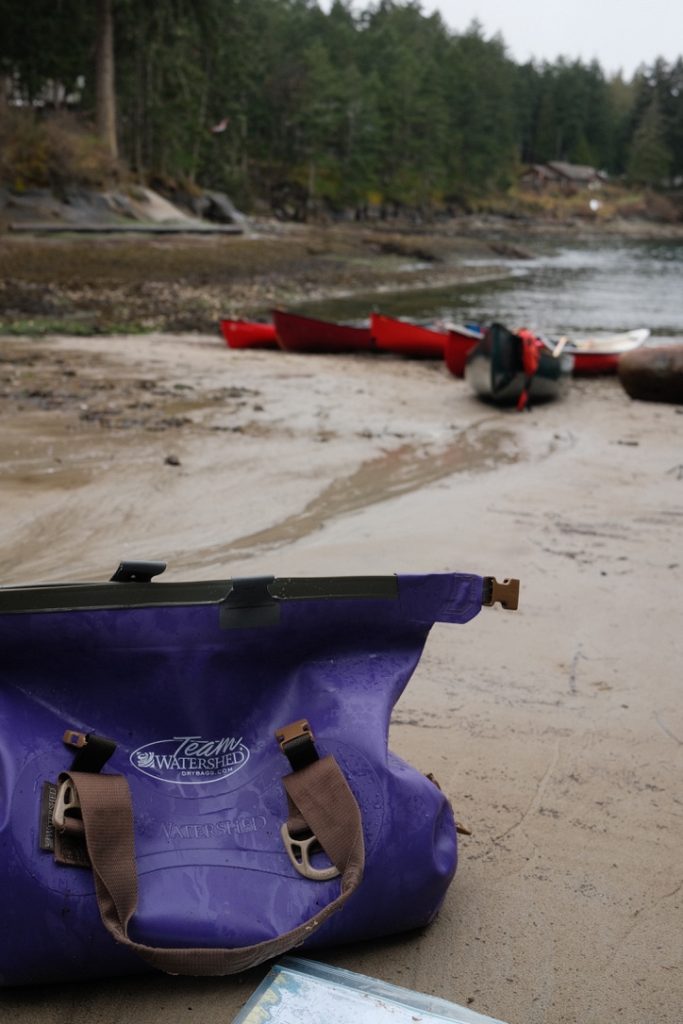
My morning is filled with equal parts anticipation, nervousness, and dread for rescue practice today. We are back in Miner’s Bay, completing the remainder of our theory lessons on the beach and spending some more time paddling in the bay. The weather has cooled, and the forecast anticipates an overcast day with showers throughout the afternoon. I suppose it’s all the same since we will be getting wet either way.
After a quick bagged lunch on the beach, everyone suits up. Donned in wetsuits and drysuits, we stand on shore discussing on-trip hazard management, throw bag techniques, and rigging one of the canoes with a spray deck. Then we load the boats up again and head back into the water. Close to the shore, we practice low braces and righting pries, methods for avoiding a capsize by
fulcruming the boat back to an upright position. There’s a lot of splashing and some nervous laughter, easing the transition into full submersion. The bay, which was so warm and inviting the previous couple of days, I had almost been tempted to go in for a swim, is now cold, gray, and dark. The low clouds that have loomed all morning finally give in, releasing a soft, steady veil of rain.
We work through a variety of rescue techniques, canoe-over-canoe, parallel, and self-rescues, using both the decked and undecked canoes. Draining the water out of a canoe with a spray deck and flipping it back upright when it’s filled with heavy tripping gear proves to be much more challenging in practice than in theory. The boat feels impossibly heavy, refusing every attempt to lift, roll, and empty it. We swamp a couple of the canoes and find different approaches to rescue them. The work feels relentless, exacerbated by the cold and the rain. Fully bailing out a swamped canoe turns out to be tedious, stubborn work, but trying to speed up the process and paddle a half-filled canoe proves to be tricky in its own right, the water sloshing from bow to stern, threatening to send
paddlers back into the chilly waters, erasing any progress made.
We close the rescue session with throw bag practice from the dock, taking turns towing boats and each other out of the water. Finally, we return to shore, dripping wet and tired, but accomplished. Back at the cabin, I peel off layers of soaked gear, the relief of finally being dry and warm returning slowly as everything gets tossed into the wash. I catch up on a few messages and emails, and sit down with the group to a deeply satisfying dinner of spaghetti and meatballs. The rest of the evening is spent poring over current and tide charts, creating our route for the following day, as we move into the coastal canoeing portion of our week. I feel settled and content, nourished both by the long, challenging day of learning and the delicious meal shared.
March 4, 2026
The quiet buzz of yesterday evening has built into a loud ringing, the sound of eleven people simultaneously carrying out our individual morning routines. I hustle to make my breakfast and pack my lunch at the same time, managing to carve out a small, quiet moment to myself to eat before piling into my car with two others before beginning the drive to the put-in.
We arrive at Aitken Point under a steady downpour and immediately get to work unloading boats and gear. There is little reward for our early morning hustle, the rain soaking through our gear as we wait for the rest of the group. In the five minutes prior to our departure, we had assigned drivers to different locations, a haphazard attempt to organize a shuttle. By the time we were reoriented and regrouped, it was already late morning.
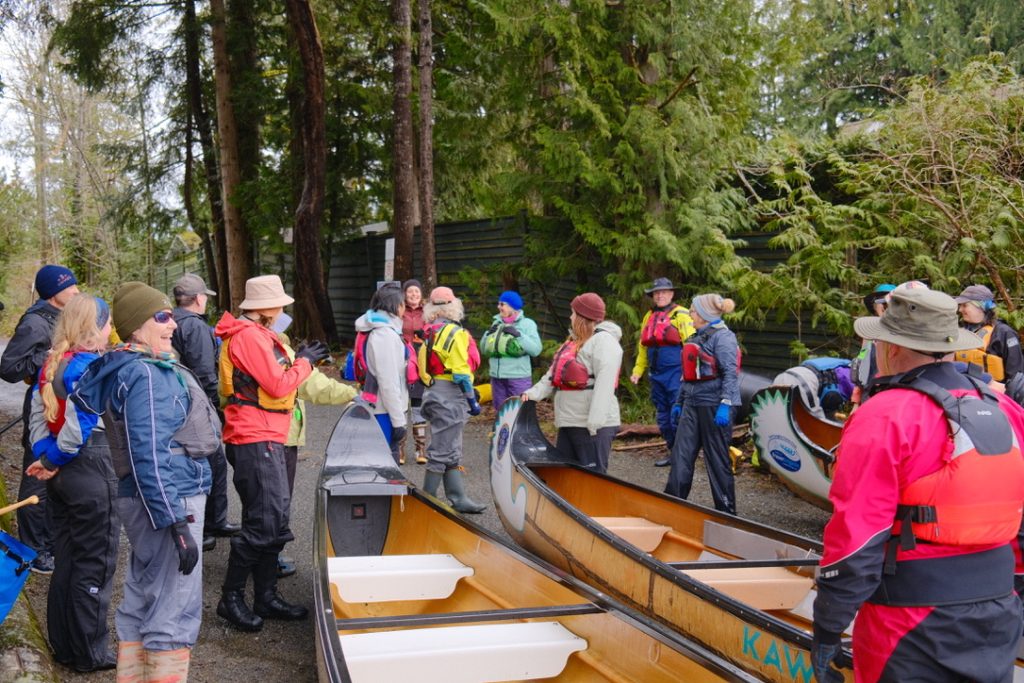
I volunteered to lead the first leg, though I found myself paired in a canoe that felt like it fought us at every stroke. More lakeworthy than seaworthy, the heavy, polyethylene boat was neither nimble nor graceful. Still, the navigation itself felt manageable. We pulled out our compasses and charts, taking bearings and practicing dead reckoning as we moved steadily up the eastern side of Mayne Island and rounded the northern tip. The water grew choppy in places as we paddled along the exposed northern end of the island, and our group chatter quickly quieted as we concentrated on aligning the boats properly against the oncoming waves.
By the time we reach David’s Cove for lunch, I feel completely drained and more than ready to hand off leadership. I feel overwhelmed and underdressed. The cold seeps into me the moment we stop moving, and I layer up too late, shivering and pacing on the beach to keep myself warm. As we continue along the top of the island and begin heading back toward Miner’s Bay, where our shuttle vehicle waited, what we had expected to be manageable currents proves to be far more intense. The tidal flow, squeezing through a narrow constriction of rocky shorelines at max flood, creates faster flows than anticipated. We try again and again to push through, but we don’t quite have the speed or strength to attain this section of current. Frustration builds as our efforts seemingly fall short, stalling us in a rocky cove of Active Pass as ferries pass by from both directions. As the first ferry’s wake hits us, waves collide from every angle, rebounding off the rocks, lifting and dropping us unpredictably and threatening to tip the hulls against the shoreline into the mussel-covered rocks just meters away.
We wait out the current, and after an hour, we are finally able to push through, the water finally slowing to a pace we can overtake. Just as we regroup the boats on the far side of the passage that has held us in place, another ferry looms into view. The nerves surge back instantly, a sharp sensation of the earlier fear of being driven sideways into jagged shoreline. This time, though, the wake meets us from a different angle. The waves roll through without the chaotic rebounding and amplifying. We rock and brace, but stay together, the threat passing almost as quickly as it approached. The worst passes, and in the midst of it all, the sun breaks through. The water eases, and the final stretch back to Miner’s Bay feels nearly effortless.
The drive back to Aitken Point is filled with incredulous laughter and the shared disbelief at the day’s unexpected challenges. Back at the cabin, the atmosphere lightens as we swap stories and debrief on the day. Evening lessons are postponed, and we ease into conversations and games instead, settling into the evening. Despite the long day, spirits remain high and laughter comes freely, the shared intensity of the day weaving us closer together.
March 5, 2026
I slept soundly last night, savouring the luxury of a bit of extra rest granted by our decision for a slightly later start this morning. We drive to Dinner Bay bathed in golden warmth, the sun returning once again. Energized and enthusiastic, we carry the canoes and gear down the steep descent to the beach with ease, our teamwork strengthened by yesterday’s shared efforts.
Sprawled out on the beach, we work through navigation and decision-making lessons, discussing strategies for the major channel crossings we have planned for today’s paddle. When we finally hit the water, it is pure bliss. The sun gleams on the calm water, and our paddling falls into an effortless rhythm, as if we are gliding across a lake rather than navigating the ocean.
We complete the first two crossings with ease, pausing briefly after each to check in and discuss whether we stayed our heading as a group or whether we drifted. We stop for lunch at Richardson Bay, and I could sense a shift in our comfort with one another, the beginnings of friendship taking shape. Our final crossing of the day is completed without issue, marking the end of a shorter paddling day. Back at the cabin, we spend the afternoon continuing our tide and navigation lessons.
Tonight, I cook dinner, serving soup and quesadillas. We eat, chat, and play games, the evening unfolding at an unhurried pace. It feels bittersweet. I’m excited to finish up the course tomorrow, yet I already dread the end to the rhythm we have established this week. It’s remarkable how quickly a sense of comfort and connection can form when close quarters and shared challenges so
naturally build bonds.
March 6, 2026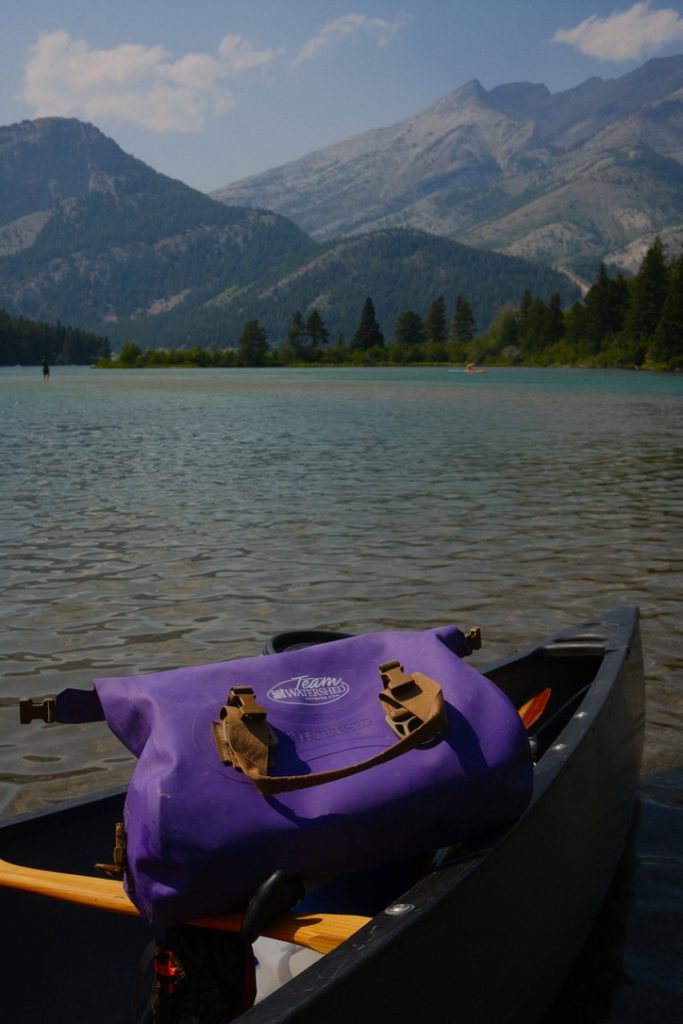
We have a 5 AM start today, timed precisely with the tidal currents to give us a window to practice paddling manoeuvres in moving waters. I eat a quick, hearty breakfast to fuel me through the long morning ahead and pack an armful of snacks in my PFD and jacket pockets.
We drive back to Aitken Point, no shuttle confusion this time, planning to put in and take out from the same spot. The morning rain eases into a light mist as we unload the boats, the quiet efficiency of an established routine. The sun rises gently behind the cast of gray fog, a muted glow above the water. My wetsuit barely tempers the early morning chill, but the nervous anticipation for what lies ahead distracts me enough. The padding is mostly calm and we are delighted to spot a few porpoises, their dark, triangular dorsal fin a contrast to the monochromatic waters.
As we approach Boat Passage, the water appears deceptively unassuming, but once we clamber up the rocks to scope from above, the current comes into focus. The water is fast and lively, swirling with whirlpools and small waves surfacing along the edges. Our early start gives us the perfect moment to practice maneuvers in the tidal currents at their peak speed. This spot is ideal for building confidence. Beyond the narrow, frothing channel, the surrounding bay opens into calm forgiving stretches, offering both safety and room for error.
We take turns practicing eddy turns and ferrying across the rushing whitewater. Those not paddling linger on the shores, snacking, chatting, and on standby, ready to assist if anyone capsizes. During one ferry, I find myself staring straight down a small whirlpool, feeling equally mesmerized and terrified. We are encouraged to lead from the stern if we are feeling confident, but despite my focus, my nervous system remains on high alert. The thought of plunging into the cold water makes me cautious, and I hold back, watching with a mix of thrill and envy as some of the others step up to the challenge.
Satisfied and tired, we begin our paddle back. My feet are numb and the early morning exertion and overall fatigue from the week has left me spent. Once we land back on shore, we load the cars and drive back to the cabin. Changed back into dry clothing, I get to work frying up more quesadillas, trying to finish the last of the groceries I brought. I feel pleasantly satisfied to feed friends and
to savour these last moments of connection.
The afternoon is spent wrapping up our lessons, culminating in a route planning assignment, a final test of our week-long immersion in compass and chart navigation, tides and currents, weather forecasting, risk management, and planning. With that, the course is officially complete. Our last evening unfolds agreeably, filled with group conversation, shared food, and warmth around the
wood-burning stove. Tomorrow, we will return to the ferry terminal, leaving behind this haven of shared adventure behind, and carrying the memories and experiences forward to our home waters.
By: Angel Chen, Team Watershed


About Post Author
