
What’s in My Bag: An ER Nurse’s Backcountry First Aid Kit for River Trips
I can’t tell you how many times I’ve been thankful to have my little first aid kit with me on the river, let alone how many times I’ve wished I’d brought it along when I hadn’t. A well-stocked first aid kit that fits comfortably in my kayak has become one of my must-haves for any and all days on the water. For me, having quick access to these basic medical supplies has made a huge difference on countless excursions both close to home and way out there in the woods. Pulling from more than a decade of whitewater experience and nearly as much working in healthcare, here’s what I’ve come to prioritize when putting together my on-the-go first aid kit:
The Bag:
● Watershed Ocoee
● Generic semi-rigid compartmentalized bag
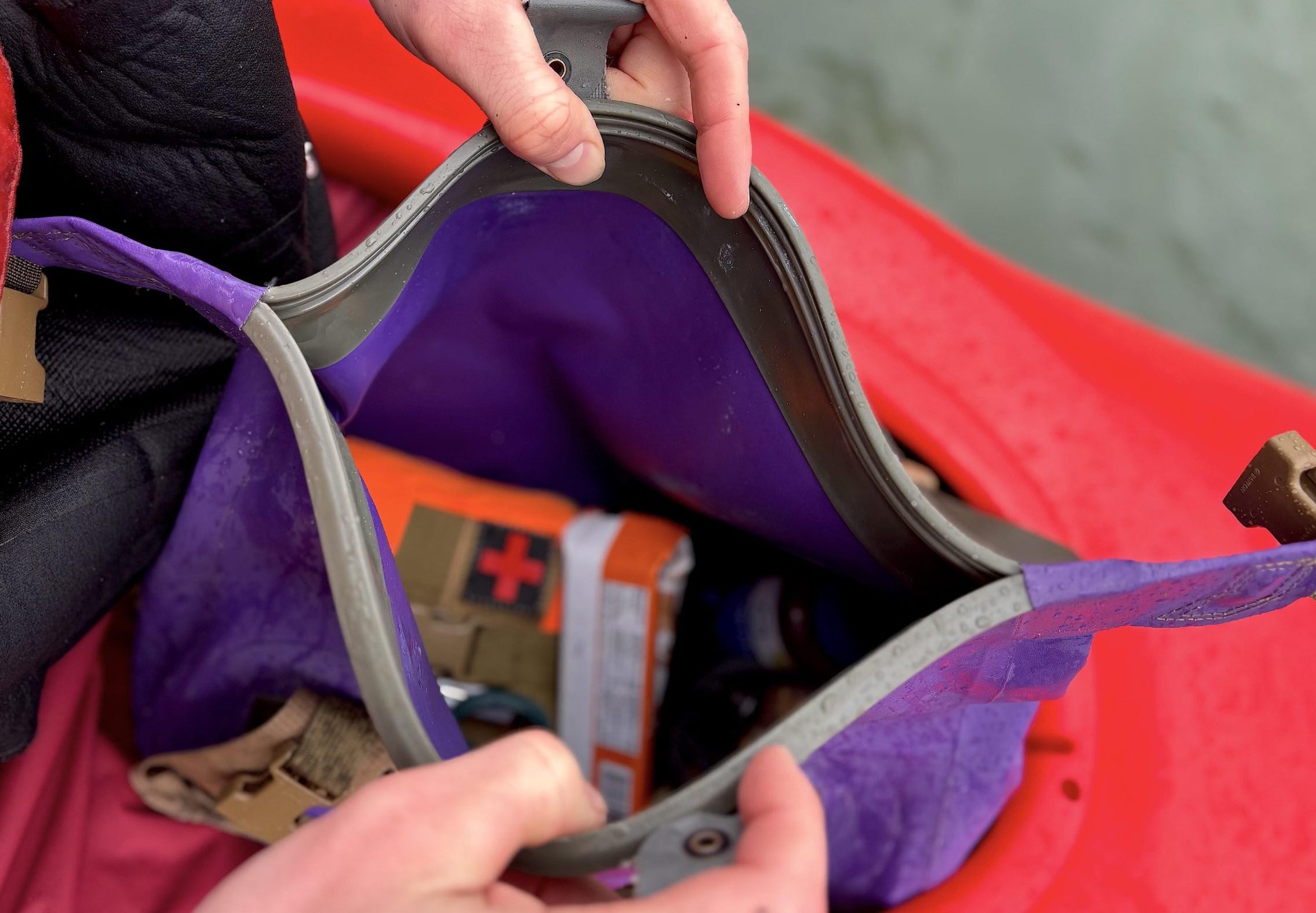
I almost always keep my first aid supplies in my Ocoee. The bag fits comfortably in my lap while I’m paddling and remains accessible when I’m getting out of my kayak. I’m never worried about my supplies getting wet or damaged, even on long portages or accidental slips into the river. With a few accoutrements hanging off the outside of my moderately-sized kit, the whole thing still takes up less than half the space of my drybag, leaving more than enough room for my other day trip accessories: a headlamp, handsaw, beanie, gloves, and lots and lots of snacks.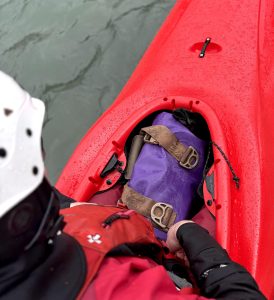
What I Pack in My First Aid Kit:
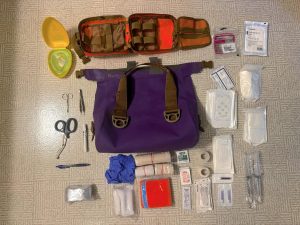
I generally try to organize my first aid kit into two main sections, splinting and wound care, with a handful of miscellaneous items scattered throughout. Keep in mind, I assembled this kit to meet basic needs in a variety of wilderness first aid scenarios, and I’ve felt the greatest benefit from carrying supplies for bone, joint, and minor soft tissue injuries. Here’s what I have in each section of my kit:
Supplies for Splinting:
● Commercial semi-rigid splint (SAM splint, etc.)
● ACE-type elastic bandage (3” and 6” wraps)
● Triangular bandages (at least 2)
These are all great tools to help immobilize and support injured bones or joints, especially if someone requires extrication from a remote area. Mobility matters, especially in the backcountry. Hiking out of a snowy canyon with a dislocated shoulder is considerably easier when you have your arm in a sling…
Wound Care Essentials:
● Sterile Saline for cleaning dirty wounds
● Bacitracin ointment
● Bandaids of various shapes/sizes
● Medical tape
● Non-adherent, antimicrobial dressing
● Non-stick gauze pads
● Large gauze roll
● ABD absorbent pads
● Transparent adhesive dressings
● Steri-strips or butterfly bandages
● Skin glue
I tend to focus my wound care on three main elements: cleansing, closure, and coverage (dressing). A syringe full of saline can rinse lots of grime out of a dirty cut or scrape. I’ve used both skin glue and steri-strips for temporary closure of deeper cuts that risk opening further or getting contaminated. I also like to carry plenty of different dressing materials to cover a range of needs depending on the location, size, and type of wound.
Extra Items I Like to Carry:
● Nitrile gloves
● CPR mask
● Over-the-counter medications (Tylenol, ibuprofen, benadyl, and zyrtec)
● Thermal blanket
● Trauma shears
● Small scissors
● Tweezers
● Mini flashlight or pen light
● Pen
The value of these first aid extras truly lies in their versatility. For all the injuries and ailments I’ve broken into my kit for, there have been multiple non-medical reasons for me to do so as well. I’ve used medical supplies for gear repair more times than I can count, and I’m always adding or switching out adjuncts to see what might be most useful. To be honest, however, most of these have been added to my bag retrospectively. It’s always easier to see the gaps in your preparedness when you’re met with an unexpected situation…
What can’t fit in the bag:
No amount of pre-planning or extra supplies can adequately supplement a lack of knowledge and experience. Training, education, and practice are paramount to operating effectively in the setting of a remote injury. This doesn’t have to be prohibitively time consuming or expensive. In fact, it shouldn’t be. Pursuing certifications in wilderness first aid can provide a huge wealth of knowledge, and taking a lay-rescuer first aid/CPR class would likely benefit all of us as adventurers, but even the simplest acts like splinting your own ankle at home can have serious impact in the field. I’ve spent much of my career training in emergency medicine, trauma nursing, and advanced life support, and still, perhaps the single most valuable skill I’ve gained from my experience in the ER is simply the ability to recognize a situation as urgent or emergent and act accordingly. All this to say, carrying an easy to access, well-stocked first aid kit is a great habit to form for all outdoor-oriented folks, but the stuff in the bag is all secondary to building comfort and familiarity with helping someone who is injured. Plan ahead, practice, and stay safe!
See y’all on the river


About Post Author
